What Should You Do First After Discovering Water Damage in Rockville, MD?
Discovering water damage in your Rockville home is frightening — a burst pipe, a failed water heater, an overflowing toilet, or a leak you only notice because of a stain spreading across the ceiling. The first hour matters more than any other. What you do in the next few minutes determines whether you're looking at a few days of drying or weeks of reconstruction and mold remediation. Here's exactly what to do, in order, and when to hand the job to a certified restoration team.
Step 1: Stop the Water at Its Source
Before anything else, stop the water from flowing. If the damage comes from a burst supply pipe, a failed washing machine hose, or a leaking water heater, shut off the main water valve to the house. In most Rockville homes it's located near the water meter, in the basement, or in a utility closet — if you don't know where yours is, find it now, before you ever need it.
If the source is a fixture instead, shut off the supply valve directly behind or beneath it. If the water is coming from outside — groundwater, a flooded crawl space, or storm intrusion — do not attempt to stop it yourself. That is groundwater, it is likely contaminated, and it needs to be handled by professionals with the right equipment.
For water heater failures, shut off the cold-water supply line feeding the tank and turn off the gas or electricity to the unit. That stops new water from entering and keeps a failing appliance from becoming an electrical or gas hazard.
Step 2: Cut the Power to Affected Areas Safely
Water and live electricity are a lethal combination. If water has reached outlets, appliances, or a flooded floor near electrical panels, do not walk through standing water to reach the breaker box. If you can reach the panel safely without crossing water, switch off power to the affected rooms — or the whole house if needed.
If the panel itself is in a wet area or you can't reach it safely, leave it alone and get out. Call an electrician or wait for the restoration crew. No amount of saved flooring or furniture is worth the risk of electrocution, and this is one of the most common ways homeowners get seriously hurt during a water emergency.
Step 3: Document Everything Before You Touch It
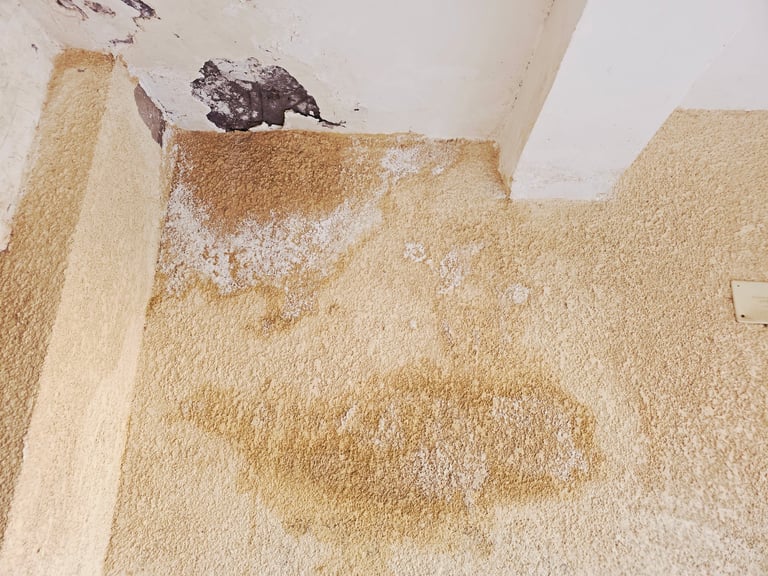
Your insurance claim depends on evidence, and evidence is what you're about to move, throw away, or dry out. Before you start cleaning, take clear photos and video of every affected area — the standing water, the waterline on the walls, damaged furniture, ruined belongings, and the source of the leak itself.
Photograph the source of the leak closely, since adjusters want to understand the cause of loss. Record the date and time you discovered the damage. If you have receipts or photos of high-value items that were damaged, gather them now — this documentation is what turns a denied claim into a covered one.
Keep a written list of everything you remove, even things you throw away. In most policies you're required to document discarded items, and 'I forgot what was in that closet' is a difficult conversation with an adjuster.
Step 4: Protect What You Can — But Don't Overdo It
Move furniture, electronics, rugs, and valuables off wet flooring to a dry area as soon as it's safe. Place aluminum foil or plastic wrap under furniture legs still sitting on damp carpet to stop stain transfer and rust rings. Wipe moisture off wood furniture and remove wet items from the surface to prevent staining and warping.
Prop up or separate wet upholstery cushions so they can dry evenly, and open cabinet doors under sinks so air can circulate. Loosen wet books and magazines to prevent pages from sticking together, and put them in a freezer if you want a chance at saving them.
What you should not do: don't run your household vacuum to remove water (it's a shock hazard and will ruin the vacuum), don't use a regular box fan directed at wet drywall, and don't attempt to dry a water-damaged ceiling by poking holes in it yourself. Improper drying doesn't just fail — it can drive moisture deeper into the structure and create the exact conditions mold needs.
Step 5: Understand the 24–48 Hour Mold Window
This is the step most Rockville homeowners underestimate. Mold can begin growing on wet building materials in as little as 24 to 48 hours. That window is not a rough guideline — it's the defining constraint of water damage restoration, and it's why the EPA and the IICRC both emphasize immediate drying.
The problem is that the water you can see is rarely the water that's causing damage. Water wicks up drywall, travels along floor joists, pools inside wall cavities, and soaks into subflooring and insulation. A wall that feels dry to the touch can be saturated an inch behind the surface. By the time visible mold appears, there's usually been a hidden moisture problem for days or weeks.
This is why professional moisture detection matters so much. Technicians use moisture meters and thermal imaging cameras to map exactly where water has traveled — into areas no visual inspection can reveal. Without that mapping, you're drying what you can see while the mold grows where you can't.
Step 6: Call a Certified Restoration Team — Fast
The single biggest factor in how much you save — in cost, in reconstruction, and in avoiding a mold problem — is how quickly professional extraction and drying begins. Every hour that water sits, it wicks further into the structure and the repair scope grows.
Pure Resto provides 24/7 emergency water damage restoration throughout Rockville and Montgomery County, with a standard 30-minute response. Our IICRC-certified technicians handle the entire process: emergency extraction, full structural drying to the IICRC S500 Standard, moisture mapping with thermal imaging, antimicrobial treatment, and complete documentation for your insurance claim.
We work directly with your insurance carrier using Xactimate estimating — the same platform most adjusters use — which speeds approval and reduces back-and-forth. And we handle the paperwork from start to finish, so you're not trying to manage a claim while your home is wet.
What NOT to Do While You Wait for Help
Avoid the mistakes that make water damage worse. Don't enter rooms where ceilings are sagging or bulging — they can collapse without warning, and a saturated ceiling weighs hundreds of pounds. Don't use electrical appliances, and don't turn on light switches or ceiling fixtures if you suspect water has reached the wiring.
Don't assume your homeowner's insurance doesn't cover it before you've filed. Most policies cover sudden and accidental water damage from burst pipes, appliance failures, and water heater ruptures — the most common causes of residential water damage. Gradual leaks and surface flooding are often handled differently, but you won't know which category you fall into until you ask.
Don't wait to see if it dries on its own. It won't — not fast enough to prevent mold, warping, and delamination. And don't sign anything or accept a settlement from an insurer until an independent restoration professional has assessed the actual scope of the damage. Undersettled claims are extremely common when the homeowner doesn't have an expert's estimate in hand.